|
Ukraine was the centre of the first eastern Slavic state, Kyivan Rus, which during the 10th and 11th centuries was the largest and most powerful state in Europe. Weakened by internecine quarrels and Mongol invasions, Kyivan Rus was incorporated into the Grand Duchy of Lithuania and eventually into the Polish-Lithuanian Commonwealth. The cultural and religious legacy of Kyivan Rus laid the foundation for Ukrainian nationalism through subsequent centuries.
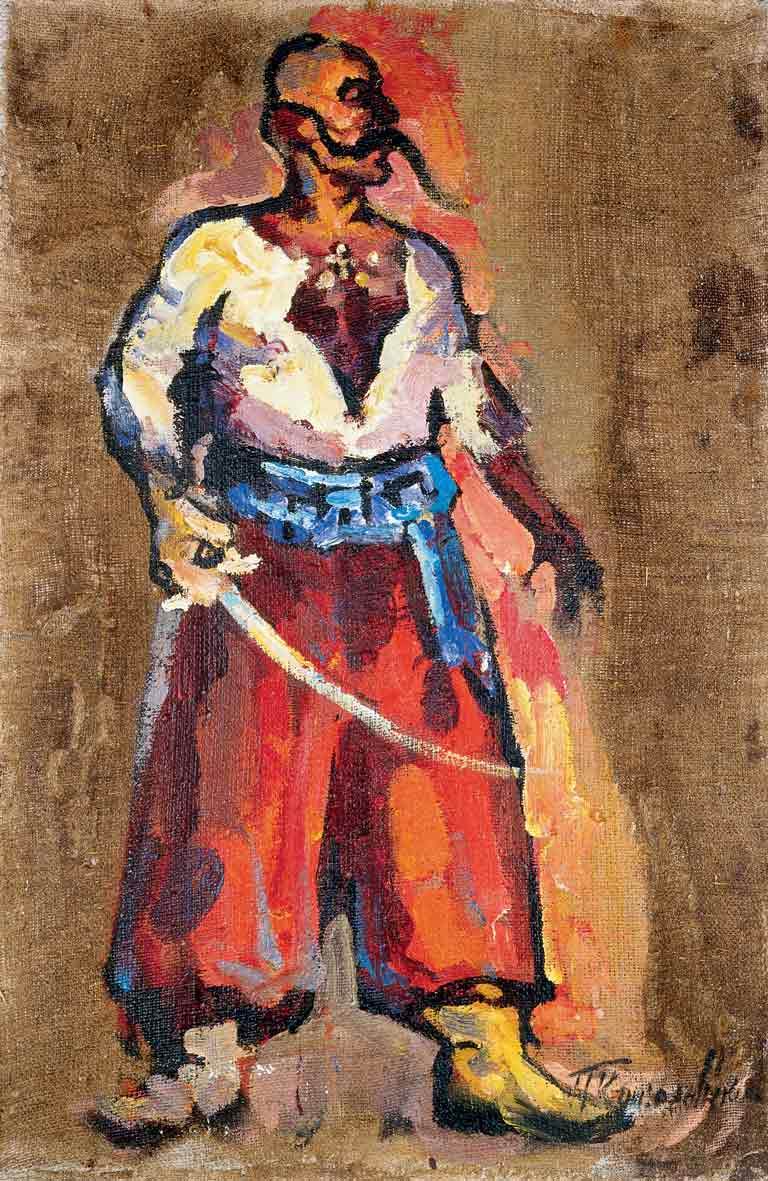 |
In the 17th and 18th centuries the Cossacks were a major force in the area.
During the latter part of the 18th century, most ethnic Ukrainian territory was absorbed by the Russian Empire. The name Україна, first used in the 12th century, means "borderlands", reflecting its geographical position between the central European empires and the Russian empire.
Following the collapse of tsarist Russia in 1917, Ukraine was for a short period (1917-20) independent, but subsequently brought into the Soviet Union. |
Despite the natural fertility of Ukrainian soil, ideologically imposed collective farming led to two famines (1921-22 and 1932-33) in which over 8 million died. As a frontier area in World War II, the clash between German and Soviet armies led to some 7 to 8 million more deaths.
The Black Sea province of Crimea is now part of Ukraine. In 1944 it had been 'ethnically cleansed' of its original inhabitants the Crimean Tatars, deported to Siberia allegedly as a punishment for co-operating with Nazi occupying forces. Subsequently in 1954 the Crimea was transferred within the Soviet Union from Russia to Ukraine.
Modern day independence for Ukraine came in August 1991 with the collapse of the Soviet Union. Inherited state control and deeply embedded corruption inhibited economic reform. The "Orange Revolution" in 2004 persuaded the Constitutional Court to overturn a presidential election which the court found to have been rigged. The "Orange" reformists were soon split by internal quarrels. Viktor Yanukovich was elected President in February 2010, with the backing of ethnic Russians particularly in the eastern regions of Ukraine. In February 2014 another protest movement in the capital Kyiv led to Rada (parliament) members voting to oust Yanukovich, who fled first to the ethnic Russian dominated Crimea then to Russia.
|


