|
The fate of the Swiss economy is tightly linked to that of its neighbours in the €uro zone, which purchases half of all Swiss exports.
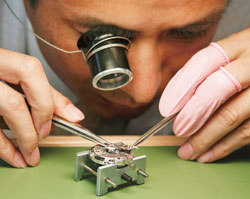
| Switzerland's economy benefits from a highly developed service sector, led by financial services, and a manufacturing industry that specialises in high-technology production. Economic and political stability, a transparent legal system, exceptional infrastructure, efficient capital markets, and low corporate tax rates have made Switzerland one of the world's most competitive economies. |
 |
The sovereign debt crises in neighbouring €uro-zone countries have become a significant risk to Switzerland's financial stability, caused especially by investors seeking a safe-haven currency driving up demand for the Swiss franc. The franc's subsequent high value has made Swiss exports less competitive and weakened the country's growth outlook.
Switzerland has also come under increasing pressure from neighbouring countries, the EU, the US and international institutions to reform its long tradition of banking secrecy.
Key facts
* Currency: Swiss franc – £1=1.494 fr, 1€=1.22 fr (February 2014)
* GDP per capita: 32,785 € (at end 2012)
* Inflation: -0.7% (2012 data)
* Unemployment rate: 2.9% (estimate at 2012)
* Natural resources: hydroelectricity
Relations with EU
In a referendum in December 1992 Switzerland voted against membership of the European Economic Area (EEA). It has since maintained and developed relationships with the European Union (EU) and European countries through bilateral agreements. The Swiss have brought their economic practices largely into conformity with the EU, but some trade protectionism remains, particularly for its small agricultural sector.
In February 2014, Swiss voters narrowly (50.3%) approved a ballot initiative launched by the nationalist Swiss People's Party to restrict immigration, and to reintroduce a quota system on foreign workers from other countries. This initiative was mostly backed by rural parts of Switzerland while metropolitan and French-speaking areas rejected it. This proposal in fact contradicts Switzerland–EU relations on the free movement of persons. All international treaties that are contradicted by this new article of the Swiss constitution must be renegotiated within three years.
Industries and exports
* machinery, chemicals, watches, textiles, precision instruments, tourism, banking and insurance
* Leading export markets:
Germany 19.8%, US 11.1%, Italy 7.2%, France 7.1%, UK 5.4% (2012)
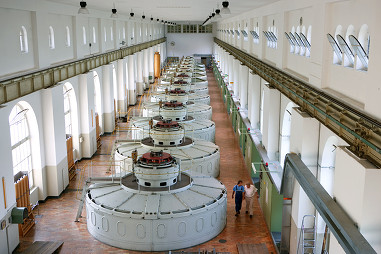
| Hydroelectricity is the most important domestic source of energy in the country. |
| * Electricity |
- from hydroelectric plants: 65.9% of total installed capacity (2010 est.) |
|
- from nuclear fuels: 18% of total installed capacity (2010 est.) |
|


