|
One of the most important tribal groups in the Swiss region was the Helvetii. In 58 BC Julius Caesar's armies defeated the Helvetii. During the 6th, 7th and 8th centuries AD the Swiss regions continued under Frankish hegemony (Merovingian and Carolingian dynasties). But under Charlemagne the Frankish empire grew too big to administer and in 843 the territories of present day Switzerland became divided into Middle Francia and East Francia until they were reunified under the Holy Roman Empire around 1000 AD.
By 1200, the Swiss plateau had been split up under the houses of Savoy, Zähringer, Habsburg and Kyburg. Some regions granted the Holy Roman Empire direct control over their mountain passes.
From the late 13th century Swiss cantons began to ally among themselves. The Swiss Confederation was founded in 1291 as a defensive alliance between three cantons. In succeeding years, other cantons joined the original three. The Swiss Confederation secured its independence from the Holy Roman Empire in 1499.
In 1798, the revolutionary French government conquered Switzerland and imposed a new unified constitution. This centralised the government of the country and effectively abolished the cantons. During warfare against France, Russian and Austrian forces invaded Switzerland. In 1803, seeking Swiss support in his war, Napoleon organised a meeting of the leading Swiss politicians in Paris. The resulting Act of Mediation restored a certain amount of Swiss autonomy and introduced a Confederation of 19 cantons. Future Swiss politics focused on balancing the tradition of self-rule in the cantons with the need for some central government.
A constitution of 1848, subsequently modified in 1874, replaced the confederation with a centralised federal government. Switzerland's sovereignty and neutrality have long been respected by the major European powers, and the country avoided involvement in either of the two World Wars.
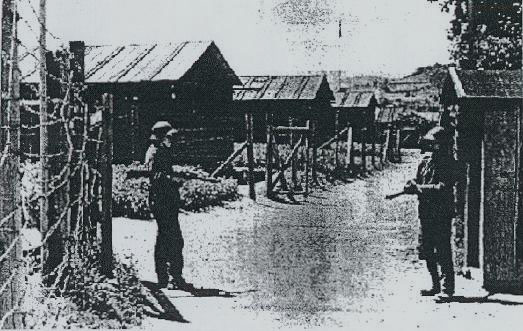 |
Although Switzerland was neutral in World War II, airmen shot down, who crashed or parachuted into Swiss territory, were held in internment camps. |
The political and economic integration of Europe since the Second World War, as well as Switzerland's role in many UN and international organisations, has strengthened the country's ties with its neighbours. The International Red Cross is based in Geneva. However, it was not until 2002 that the country officially became a United Nations member. Switzerland remains active in many UN and international organisations but still retains its strong commitment to neutrality.
|


