|
Nationalism and culture In the period of 600 years up to the 19th century the Baltic peoples were largely assimilated into German culture, particularly the middle and upper classes. Peasant people continued to preserve traditional Latvian folklore and thousands of folksongs have survived in this way.
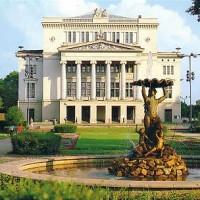 |
The 19th century saw the birth of Latvian nationalism and the rediscovery of older traditions. It was also during that period that Richard Wagner, later famous for his operas, worked for a time in the Rīga City Theatre, which later became Latvia's National Opera. Wagner arrived in RÄ«ga in 1837 and worked in the city theatre. It was a stormy sea voyage from Rīga to London that inspired Wagner to write Der fliegende Holländer (The Flying Dutchman). After WW2, from 1945 to 1991, German influence was replaced by Soviet Russian cultural expectations. |
Latvia is well known for its choral singing traditions. One positive aspect of the 46-year Soviet occupation was a commitment to children's music education. Latvian singers and musicians are now found throughout the world.
1.7 million people speak Latvian over the world today. There are three separate dialects: the Liv, Middle and Latgalian dialects. The Latvian literary language has been created based on the Middle dialect. Literature in Latvia is currently published in two languages - Latvian and Latgalian.
Cuisine Find out more about Latvian cooking traditions and eating customs
Famous people
Mariss Jansons - orchestral conductor
Gidon Kremer - violinist
Mark Rothko - abstract artist
Mikhail Baryshnikov - ballet dancer and choreographer
Friedrich Zander - designed the first liquid-fuelled rocket to be launched in the Soviet Union
Walter Zapp - invented the world's first high resolution mini-camera, the "spy" camera
Wilhelm Ostwald - Nobel Prize for Chemistry in 1909, inventor of nitrate fertilisers
Sir Isaiah Berlin - Oxford University philosopher and historian, President of the British Academy
Mikhail Tal - Chess Grandmaster and the eighth World Chess Champion
Jacob Davis - a tailor from Rīga who invented the canvas rivets that became the trademark of Levi Strauss jeans
Arvids Blumentals - became an opal miner in Australia and is credited with being the inspiration for Crocodile Dundee.
Extensive information about Latvian culture can be found on-line from the Latvian Institute
|


